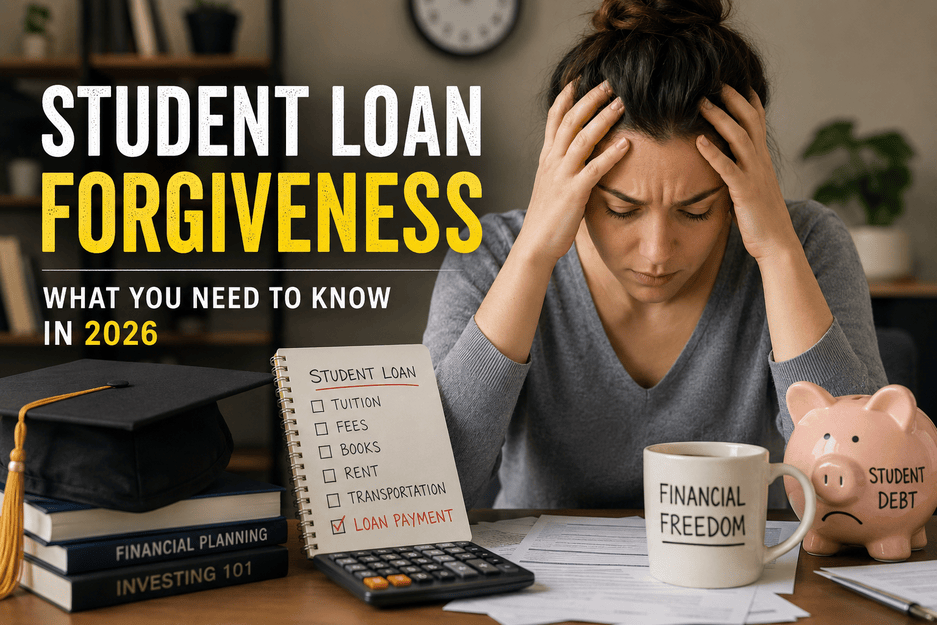

Student debt has become one of the biggest financial burdens for millions of people worldwide. For many graduates, monthly payments feel like a second rent payment that follows them for years. That’s why the phrase student loan forgiveness continues to dominate financial conversations, political debates, and social media discussions.
But here’s the problem: most borrowers still don’t fully understand how student loan forgiveness actually works.
Some assume all debt will magically disappear. Others believe forgiveness programs are scams or impossible to qualify for. The reality sits somewhere in between. There are legitimate forgiveness options available, but they come with rules, timelines, and eligibility requirements that many borrowers overlook.
In this guide, we’ll break down the major student loan forgiveness programs, compare repayment options, explain who truly benefits, and share practical strategies that can save borrowers thousands of dollars over time.
What Is Student Loan Forgiveness?
Student loan forgiveness is a government-approved process that cancels part or all of a borrower’s remaining student debt after specific conditions are met.
These conditions may include:
- Working in public service
- Making payments for a set number of years
- Teaching in underserved communities
- Enrolling in income-driven repayment plans
- Having a school shut down or commit fraud
In the United States, most forgiveness programs apply to federal student loans rather than private loans.
According to the Federal Student Aid office, millions of borrowers have already received some form of loan discharge or forgiveness through existing programs.
Why Student Loan Debt Became a Crisis ?
The student debt conversation isn’t just about numbers — it’s about life decisions.
Many borrowers delay:
- Buying homes
- Starting businesses
- Getting married
- Having children
- Saving for retirement
Tuition costs have risen dramatically over the past two decades while wages have not kept pace. As a result, graduates often enter the workforce carrying debt larger than their annual salaries.
A report from The Brookings Institution noted that student debt disproportionately impacts middle-income households and first-generation college students.
What makes the situation more complicated is interest accumulation. Borrowers sometimes repay for years yet barely reduce the principal balance.
Types of Student Loan Forgiveness Programs
1. Public Service Loan Forgiveness (PSLF)
One of the most well-known programs is Public Service Loan Forgiveness.
Under PSLF:
- Borrowers work for qualifying government or nonprofit organizations
- Make 120 qualifying monthly payments
- Remaining balance gets forgiven tax-free
Eligible employers include:
- Public schools
- Government agencies
- Nonprofit hospitals
- Emergency services organizations
The program became controversial because many applicants were initially denied due to technical paperwork issues. However, recent reforms simplified the process considerably.
More details are available through Public Service Loan Forgiveness Program.
2. Income-Driven Repayment (IDR) Forgiveness
Income-driven repayment plans adjust monthly payments based on income and family size.
After 20–25 years of qualifying payments:
- Remaining balance may be forgiven
Popular IDR plans include:
- SAVE Plan
- PAYE
- IBR
- ICR
This option helps borrowers with lower incomes avoid financial hardship.
One important consideration: depending on tax laws, forgiven balances outside PSLF may sometimes be treated as taxable income.
3. Teacher Loan Forgiveness
Teachers serving low-income schools may qualify for partial forgiveness.
Benefits typically include:
- Up to $17,500 forgiveness for math, science, or special education teachers
- Lower forgiveness amounts for other eligible educators
Requirements usually involve:
- Full-time teaching
- Five consecutive years of service
- Employment at qualifying schools
The Teacher Cancellation Low Income Directory helps educators verify school eligibility.
4. Closed School Discharge
If a college closes while students are enrolled or shortly after withdrawal, borrowers may qualify for discharge.
This became especially important after several for-profit colleges shut down unexpectedly.
Borrowers may receive:
- Full cancellation of federal loans
- Refunds of previous payments
- Credit report adjustments
5. Borrower Defense to Repayment
Students misled by colleges regarding:
- Employment outcomes
- Accreditation
- Transfer credits
- Program quality
may apply for loan cancellation under borrower defense rules.
This program expanded significantly following investigations into deceptive educational institutions.
Federal vs. Private Student Loans
Not all loans qualify for forgiveness.
| Feature | Federal Loans | Private Loans |
|---|---|---|
| Government forgiveness programs | Yes | Rarely |
| Income-driven repayment | Yes | Usually no |
| Flexible hardship options | Yes | Limited |
| Interest rates | Fixed | Variable or fixed |
| Public service eligibility | Yes | No |
Private lenders occasionally offer hardship assistance, but true forgiveness is uncommon.
Borrowers with private loans often focus on:
- Refinancing
- Lower interest rates
- Extended repayment terms
Comparing the Major Forgiveness Programs
| Program | Time Required | Best For | Tax-Free Forgiveness |
|---|---|---|---|
| PSLF | 10 years | Public sector workers | Yes |
| IDR Forgiveness | 20–25 years | Low-income borrowers | Sometimes |
| Teacher Forgiveness | 5 years | Teachers | Yes |
| Closed School Discharge | Immediate | School closures | Yes |
| Borrower Defense | Varies | Misled students | Usually |
Common Myths About Student Loan Forgiveness
Myth 1: Everyone Qualifies
Reality: Eligibility rules are strict. Employment type, repayment plan, and loan type matter significantly.
Myth 2: Forgiveness Happens Automatically
Borrowers usually must:
- Submit applications
- Certify employment
- Track qualifying payments
- Update income annually
Ignoring paperwork can delay or prevent approval.
Myth 3: Forgiveness Destroys Your Credit
In most legitimate forgiveness situations, credit scores are not damaged simply because debt was forgiven.
In fact, lower debt balances may improve debt-to-income ratios over time.
Myth 4: Private Loans Can Easily Be Forgiven
Most private lenders do not offer formal forgiveness programs.
This misconception often leads borrowers toward misleading debt-relief companies charging unnecessary fees.
The Consumer Financial Protection Bureau regularly warns borrowers about student debt scams.
The Emotional Side of Student Debt
Financial discussions usually focus on numbers, but debt also carries emotional weight.
Many borrowers describe:
- Constant stress
- Career pressure
- Anxiety around future planning
- Guilt about education choices
Interestingly, some graduates with manageable debt still feel overwhelmed because repayment stretches across decades.
One borrower shared in a Reddit discussion that seeing the balance barely change after years of payments felt “psychologically exhausting.” That emotional burden explains why forgiveness programs generate such strong public reactions.
Smart Strategies Before Pursuing Forgiveness
Student loan forgiveness isn’t always the fastest or cheapest option.
Sometimes aggressive repayment saves more money overall.
Before committing to long-term forgiveness plans, borrowers should evaluate:
1. Total Interest Costs
Lower monthly payments often mean paying more interest over time.
2. Career Stability
PSLF only works if borrowers remain in qualifying public-service employment.
Changing careers midway can reset financial expectations.
3. Tax Consequences
Some forgiven balances may eventually create tax bills.
Consulting a financial advisor or tax professional can help avoid surprises.
4. Refinancing Risks
Refinancing federal loans into private loans may eliminate forgiveness eligibility permanently.
This is one of the biggest mistakes borrowers make.
How Politics Impacts Student Loan Forgiveness ?
Student loan forgiveness policies change frequently depending on political leadership and court decisions.
Some administrations support broader relief initiatives, while others prioritize stricter repayment structures.
Because of ongoing legal and political shifts, borrowers should regularly monitor updates through official government sources rather than relying solely on social media rumors.
The most reliable source remains Federal Student Aid.
Practical Tips for Managing Student Loans in 2026
Stay Organized
Keep records of:
- Payment history
- Employer certifications
- Loan servicer communications
- Tax documents
Recertify Income on Time
Missing IDR recertification deadlines can dramatically increase payments.
Avoid Scams
Never pay large upfront fees for forgiveness applications.
Federal programs are accessible directly through government websites.
Review Your Loans Annually
Interest rates, repayment plans, and eligibility rules can change.
An annual review helps optimize repayment strategy.
The Future of Student Loan Forgiveness
The future of student loan forgiveness will likely involve:
- Expanded income-based plans
- Simplified application systems
- Increased borrower protections
- Ongoing legal battles over mass cancellation
What’s clear is that student debt remains a major economic issue affecting millions of households.
Even critics of forgiveness programs acknowledge that the current repayment system often feels confusing and inefficient.
Final Thoughts
Student loan forgiveness can be life-changing — but only when borrowers understand the system and use it strategically.
The biggest mistake people make is assuming forgiveness is automatic or universal. In reality, successful borrowers stay informed, track paperwork carefully, and choose repayment plans aligned with their long-term goals.
Whether you’re pursuing PSLF, income-driven repayment forgiveness, or simply exploring your options, the key is proactive financial planning.
Student debt may feel overwhelming today, but informed decisions can dramatically improve your financial future over time.
FAQs About Student Loan Forgiveness
Who qualifies for student loan forgiveness?
Eligibility depends on loan type, employment, repayment history, and the specific forgiveness program.
Are private student loans eligible for forgiveness?
Generally, no. Most forgiveness programs apply only to federal student loans.
Is student loan forgiveness taxable?
Some programs are tax-free, while others may create taxable income depending on current tax laws.
How long does PSLF take?
Public Service Loan Forgiveness requires 120 qualifying monthly payments, usually about 10 years.
Can I apply for forgiveness myself?
Yes. Borrowers can apply directly through official federal websites without paying third-party companies.
External Resources
Call to Action
Have questions about student loan forgiveness or personal experiences with repayment programs? Share your thoughts in the comments and explore more financial guides to make smarter money decisions in 2026.