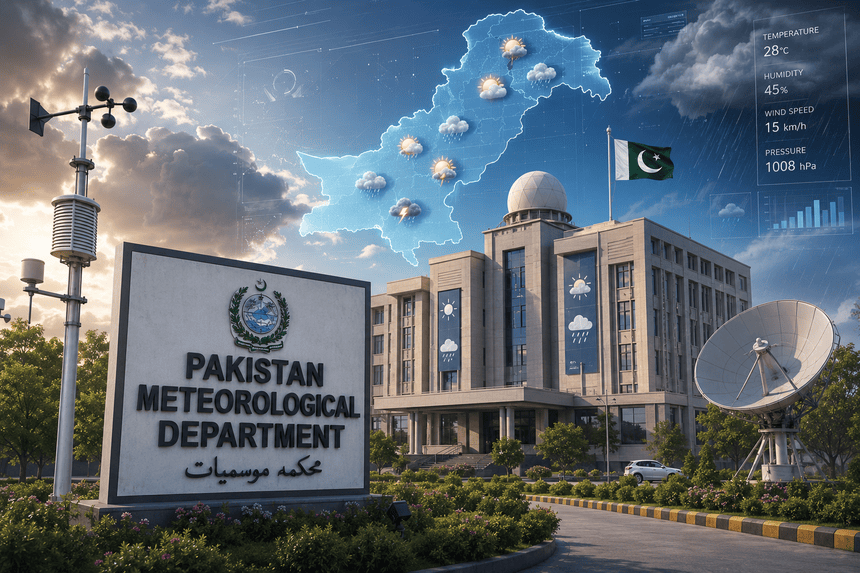

When most people hear the term Pakistan Meteorological Department, they immediately think of daily weather updates: rain forecasts, heatwave warnings, or monsoon alerts. But the reality is far bigger.
The Pakistan Meteorological Department, commonly known as PMD, plays a critical role in Pakistan’s safety, agriculture, aviation, disaster preparedness, and climate monitoring. From warning fishermen about cyclones to helping farmers plan crop seasons, PMD quietly influences millions of lives every day.
In recent years, especially after devastating floods, heatwaves, and unusual weather patterns, public awareness about PMD has grown rapidly. Pakistanis now rely on weather alerts more than ever before.
This article explores how the Pakistan Meteorological Department works, why it matters, its achievements, challenges, and how it is shaping Pakistan’s future in an era of climate change.
What Is the Pakistan Meteorological Department ?
The Pakistan Meteorological Department is Pakistan’s official national weather agency. Established in 1947 after independence, PMD inherited only 15 weather observatories but gradually evolved into one of the country’s most important scientific institutions.
Today, PMD provides services related to:
- Weather forecasting
- Flood forecasting
- Earthquake monitoring
- Climate research
- Agricultural meteorology
- Aviation weather services
- Tsunami warnings
- Glacier monitoring
- Drought assessments
It operates under Pakistan’s government and works closely with international organizations like the World Meteorological Organization.
Why the Pakistan Meteorological Department Matters ?
Pakistan is one of the world’s most climate-vulnerable countries. The nation faces:
- Extreme heatwaves
- Monsoon floods
- Droughts
- Cyclones
- Glacial melting
- Dust storms
- Earthquakes
Without accurate forecasting systems, these events can quickly become humanitarian disasters.
PMD acts as an early warning system for the country. When severe weather approaches, the department issues alerts to government agencies, media outlets, airlines, farmers, and the public.
Real-Life Impact
Many Pakistanis remember the Murree snow tragedy in 2022. Discussions online highlighted how PMD had already issued weather warnings days earlier, showing how important public awareness and communication are during emergencies.
This reflects a growing reality: weather information can save lives.
Key Services Offered by PMD
1. Weather Forecasting
The department’s most visible function is daily weather prediction.
Through the PMD Weather Portal, users can access:
- Daily forecasts
- Weekly outlooks
- Rain alerts
- Fog updates
- Heatwave warnings
- Tourist weather reports
Forecasts cover major cities including:
| City | Services Available |
|---|---|
| Islamabad | Daily weather & temperature |
| Lahore | Rain and fog alerts |
| Karachi | Cyclone and humidity monitoring |
| Peshawar | Dust storm forecasts |
| Gilgit | Snowfall and glacier monitoring |
2. Flood Forecasting
Floods remain one of Pakistan’s biggest threats. PMD’s Flood Forecasting Division monitors rainfall, river levels, and weather systems during monsoon seasons.
The department issues warnings for:
- Urban flooding
- River flooding
- Flash floods
- Glacier lake outburst floods (GLOFs)
This information supports disaster management authorities and emergency responders.
3. Earthquake Monitoring
Many people do not realize that PMD also monitors seismic activity.
Pakistan lies near active tectonic boundaries, making earthquake tracking essential. PMD’s seismic centers quickly release earthquake information after tremors occur.
For example, during the Karachi earthquake event in 2025, PMD provided rapid updates about magnitude, epicenter location, and depth.
4. Agricultural Support
Agriculture contributes heavily to Pakistan’s economy, making weather information extremely valuable for farmers.
PMD’s National Agromet Center provides:
- Crop advisories
- Rainfall predictions
- Seasonal forecasts
- Climate risk information
Farmers can use these updates to plan irrigation, harvesting, and sowing seasons more effectively.
5. Climate Change Research
Climate change is becoming impossible to ignore in Pakistan.
Rising temperatures, glacier melt, and shifting rainfall patterns have increased pressure on scientific institutions. PMD now conducts climate research and seasonal modeling to help policymakers understand future risks.
Experts from PMD have also discussed the possible impacts of El Niño and global warming on South Asia’s monsoon systems.
Pakistan Meteorological Department vs Weather Apps
Many people rely on international apps like AccuWeather or Google Weather. However, local users often report that PMD forecasts are more accurate for Pakistan-specific conditions.
Here’s a quick comparison:
| Feature | PMD | International Weather Apps |
|---|---|---|
| Local expertise | Excellent | Moderate |
| Pakistan-specific alerts | Yes | Limited |
| Flood warnings | Yes | Rare |
| Earthquake updates | Yes | Limited |
| Agricultural advisories | Yes | No |
| Local language support | Partial | Limited |
PMD’s strength lies in understanding Pakistan’s geography, monsoon behavior, and regional climate patterns.
Challenges Faced by PMD
Despite its importance, the Pakistan Meteorological Department faces several challenges.
Limited Public Awareness
Many citizens still do not regularly check official weather advisories. Social media rumors often spread faster than scientific updates.
Funding and Technology
Advanced forecasting systems require expensive radar networks, satellites, and computing infrastructure.
Communication Gaps
Sometimes warnings fail to reach rural communities in time, especially in remote mountainous regions.
Climate Complexity
Climate change is making weather patterns more unpredictable, increasing the difficulty of accurate forecasting.
How PMD Has Modernized Over Time ?
The department has significantly evolved since 1947.
Today PMD uses:
- Satellite imagery
- Weather radars
- Numerical weather prediction models
- Automated weather stations
- Climate data centers
Its digital platforms now provide faster updates to the public.
There is also increasing demand for mobile-friendly forecasting tools as smartphone usage expands across Pakistan.
PMD and Disaster Preparedness
One of PMD’s biggest contributions is disaster risk reduction.
Early warnings can help:
- Schools close before storms
- Fishermen avoid dangerous seas
- Authorities evacuate flood zones
- Airlines prepare for turbulence
- Hospitals prepare for heatwaves
In climate-sensitive countries like Pakistan, forecasting is no longer just a convenience—it is public safety infrastructure.
Public Trust and Social Media
In recent years, PMD has gained stronger public visibility on social media and news channels.
Whenever rain systems approach Karachi, Lahore, or Islamabad, PMD updates trend online almost instantly. News channels regularly quote PMD forecasts during monsoon seasons and heatwaves.
This increased engagement is positive because it encourages weather awareness among ordinary citizens.
The Future of the Pakistan Meteorological Department
The future role of PMD will become even more important as climate risks intensify.
Experts expect Pakistan to face:
- More heatwaves
- Stronger monsoon variability
- Increased glacier melting
- Water shortages
- Extreme weather events
To handle these threats, PMD may continue expanding:
- AI-based forecasting systems
- Real-time disaster alerts
- Climate modeling
- Mobile applications
- Public awareness campaigns
The demand for accurate climate intelligence will only grow.
Useful Official Resources
Here are some trusted PMD resources:
These sources provide reliable updates directly from the department.
Final Thoughts
The Pakistan Meteorological Department is far more than a weather forecasting office. It is a scientific institution that protects lives, supports agriculture, monitors disasters, and helps Pakistan prepare for an uncertain climate future.
Most people only notice PMD during storms, floods, or earthquakes. But behind the scenes, meteorologists, climate scientists, and technical experts work continuously to monitor changing environmental conditions across the country.
As Pakistan faces increasing climate challenges, PMD’s role will become even more critical. Public awareness, stronger communication systems, and investment in modern forecasting technology can help the department serve the nation even more effectively.
FAQs About Pakistan Meteorological Department
What does the Pakistan Meteorological Department do?
The Pakistan Meteorological Department provides weather forecasts, flood alerts, earthquake monitoring, climate research, and agricultural weather services.
When was PMD established?
PMD was established in 1947 after Pakistan gained independence.
Is PMD more accurate than weather apps?
For Pakistan-specific conditions such as monsoons, fog, floods, and heatwaves, many users consider PMD forecasts more reliable than international weather apps.
Does PMD monitor earthquakes?
Yes. PMD operates seismic monitoring systems and provides earthquake alerts and information.
Where can I check official PMD forecasts?
You can visit the official PMD weather portal for forecasts, alerts, and climate information.